HSK 3

Lesson 14 · 这本书被别人借走了

What you'll learn

Introduce campus activities and encourage others with passive `被`, ordered actions, and reassuring `X什么啊`.
About 36 min
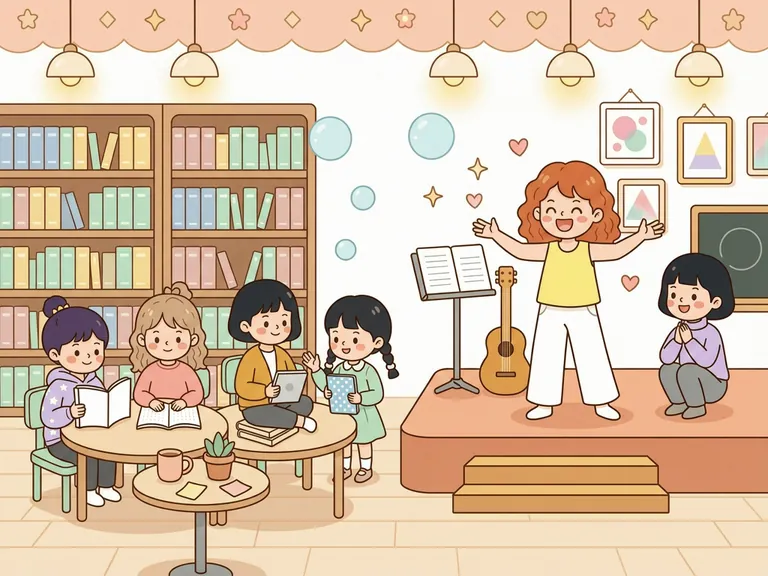
A cute cartoon campus library and event practice scene with students, blank books, and a small stage.
1

Listen and Read

Talk about a checked-out book and encourage a friend before a performance.

小林
那本电子书被同学借走了,我现在看不了。
Nà běn diàn zǐ shū bèi tóng xué jiè zǒu le, wǒ xiàn zài kàn bù liǎo.
That e-book was borrowed by a classmate, so I cannot read it now.
小雨
没关系,你可以先看别的书,然后再去图书馆。
Méi guān xì, nǐ kě yǐ xiān kàn bié de shū, rán hòu zài qù tú shū guǎn.
No problem. You can read another book first, then go to the library again.
小林
下午还有节目表演,我有些紧张。
Xià wǔ hái yǒu jié mù biǎo yǎn, wǒ yǒu xiē jǐn zhāng.
There is also a performance this afternoon, and I am a little nervous.
小雨
紧张什么啊?你唱歌唱得很好。
Jǐn zhāng shén me a? Nǐ chàng gē chàng dé hěn hǎo.
What is there to be nervous about? You sing very well.
小林
谢谢你相信我,我再练一遍。
Xiè xiè nǐ xiāng xìn wǒ, wǒ zài liàn yí biàn.
Thanks for believing in me. I will practice one more time.
2

Core Words

Practice the words that carry this lesson's dialogue, patterns, and final question.

图书馆
tú shū guǎn
library
电子书
diàn zǐ shū
e-book
表演
biǎo yǎn
to perform; performance
节目
jié mù
program; performance item
相信
xiāng xìn
to believe
紧张
jǐn zhāng
nervous
3

Pattern: Passive `被`

subject + 被 + person + verb + result

`被` shows that the subject is affected by an action, often with an unwanted or passive feeling.

那本电子书被同学借走了。
Nà běn diàn zǐ shū bèi tóng xué jiè zǒu le.
That e-book was borrowed by a classmate.
我的校园卡被同学捡到了。
Wǒ de xiào yuán kǎ bèi tóng xué jiǎn dào le.
My campus card was picked up by a classmate.
4

Pattern: `先...然后/再...`

先 + action,然后/再 + action

Use this pattern to show the order of actions.

你先看别的书,然后去图书馆。
Nǐ xiān kàn bié de shū, rán hòu qù tú shū guǎn.
Read another book first, then go to the library.
我们先练歌,再上台。
Wǒ men xiān liàn gē, zài shàng tái.
We practice the song first, then go on stage.
5

Pattern: `X什么啊`

verb/adjective + 什么啊

This spoken pattern dismisses a worry or doubt and sounds reassuring or gently corrective.

担心什么啊?你已经准备好了。
Dān xīn shén me a? Nǐ yǐ jīng zhǔn bèi hǎo le.
What is there to worry about? You have already prepared well.
怕什么啊?我们一起想办法。
Pà shén me a? Wǒ men yì qǐ xiǎng bàn fǎ.
What is there to be afraid of? We will think of a solution together.
6

Learning Note

`被` is often emotionally colored.

In many beginner-to-intermediate contexts, `被` is used when the result is unexpected, inconvenient, or not controlled by the speaker.

7

Practice

Choose the passive sentence.

A classmate borrowed the e-book, so you cannot read it now.

Which sentence uses `被` correctly?

8

Practice

Choose the action-order sentence.

You first read another book, then go to the library.

Which sentence shows the order clearly?